


Unexplained Drafts and Dust: The Fall Climate Control Dilemma
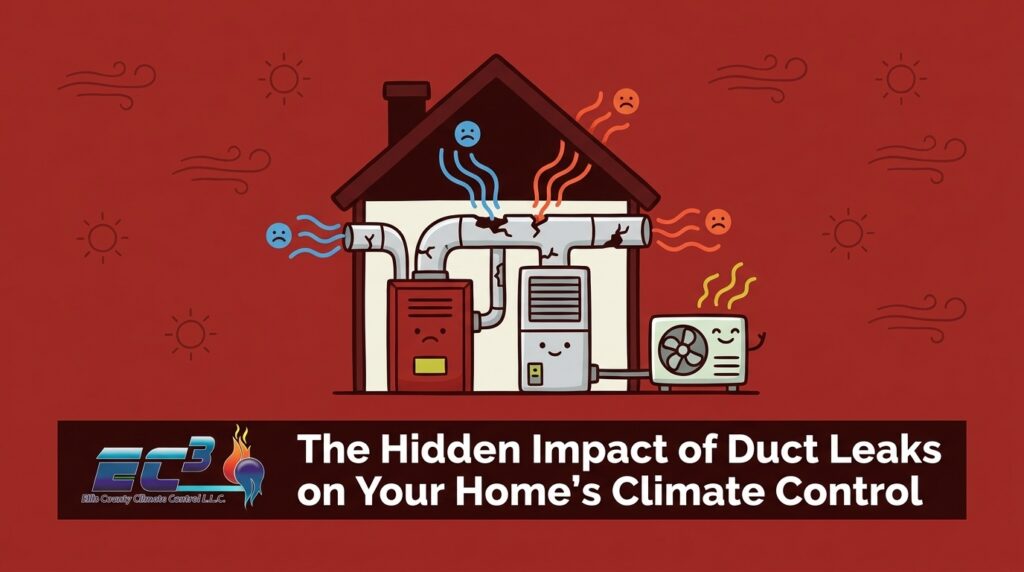
You turn on your heater to chase away the autumn chill, but instead of cozy warmth, you are greeted by dusty air, uneven temperatures, and the hidden impact of duct leaks on your home’s climate control. That strange, stale smell and the sudden layer of dust settling on your furniture are frustrating signs that something is wrong. Most homeowners immediately assume their main heating unit is failing or needs a major repair. However, the true culprit is often hiding right above your ceiling.
When you schedule your October fall maintenance and heating-startup, it is the perfect time to look beyond the mechanical equipment. Hidden breaches in your attic ductwork are frequently the root cause of a compromised indoor environment. Unsealed connections act like open windows in your attic, spilling the air you paid to heat into the rafters while pulling dirty, unconditioned air into your living space. Addressing these hidden leaks is the first, most critical step to restoring true comfort in your home. Before you assume you need HVAC repair, exploring comprehensive indoor air quality solutions starts with evaluating the delivery system itself.
The Physics of Air Pressure in Unconditioned Attics
To understand why duct leaks cause such massive disruptions, you have to look at the physics of your home. Your house is divided into two distinct zones: conditioned living spaces where you control the temperature, and unconditioned spaces like your attic. Your ductwork forms a bridge between these two zones. When thin metal or flexible ducting runs through an unconditioned attic, it faces extreme environmental stress.
In our region, Waxahachie / Ellis County attics can retain intense, baking heat during the day even as evening temperatures drop significantly. This creates severe thermal stress on the duct materials. When a leak forms, it disrupts the delicate pressure balance your system relies on. A leak on the supply side creates positive pressure in the attic, forcing your freshly heated or cooled air out into the rafters. Conversely, a leak on the return side creates negative pressure, acting like a giant vacuum cleaner that sucks unconditioned attic air directly into your home. This continuous pressure imbalance prevents your system from ever reaching the thermostat’s set point, no matter how long it runs.
Understanding Thermal Loss in Ductwork
Even if a duct system is relatively well-sealed, temperature differentials can strip energy from the traveling air. However, when physical holes exist, insulation alone cannot compensate for the loss. The physics of thermal loss dictate that air takes the path of least resistance. When a connection comes loose, a massive volume of air escapes before it ever reaches your vents. This thermal loss is a primary reason why managing indoor humidity in Waxahachie becomes so difficult during transitional seasons. The unconditioned air pulled into the system brings its own moisture levels, completely overriding your equipment’s ability to regulate the indoor climate.

How Unsealed Ducts Sabotage Indoor Air Quality
The mechanical failure of a duct leak directly causes the rapid decline of your indoor air quality. When your return ducts have holes, they create a powerful vacuum effect within a dusty, dirty attic. Instead of pulling air exclusively from the return grilles inside your clean home, the blower motor pulls whatever surrounds the leak.
This means your system is actively drawing in common attic contaminants and distributing them through every vent in your house. The list of unwanted particles includes fiberglass insulation fragments, dust mites, pollen, pest dander, and stale, stagnant air. If you find yourself constantly dusting your home in Waxahachie / Ellis County, or if your family experiences sudden respiratory irritation when the blower kicks on, attic air intrusion is a highly likely cause. Finding solutions for HVAC air flow problems requires stopping this dirty air at the source.
The Bypass Effect on Filtration
Many homeowners invest in expensive, high-MERV air filters hoping to improve their air quality. Unfortunately, a return duct leak renders those premium filters completely useless. Because the leaks are located downstream of the filter housing, the contaminated attic air bypasses the filter entirely. It travels straight into the blower motor, over the heat exchanger or evaporator coil, and directly into your living room. Furthermore, this unfiltered air intrusion causes sudden, unexplainable spikes in indoor humidity, making your home feel clammy and uncomfortable even when the system is running.
The Invisible Drain: Measuring Energy and Efficiency Loss
Beyond the dust and discomfort, leaky ducts represent a massive financial and operational drain on your household. According to ENERGY STAR data, in a typical home, 20 to 30 percent of the air that moves through the duct system is lost due to leaks, holes, and poorly connected joints. That means for every unit of energy you pay for, nearly a third of it is wasted conditioning the attic or escaping through the roof.
This 30 percent loss forces your blower motor and compressor to run significantly longer cycles to satisfy the thermostat. When the system has to work overtime just to compensate for the lost air, it places immense wear and tear on the internal mechanical components. Parts overheat, motors burn out prematurely, and the overall lifespan of the equipment drops dramatically. Many homeowners in Waxahachie / Ellis County decide to upgrade to a high-efficiency unit hoping to lower their utility bills. However, if you want to truly maximize HVAC efficiency, you must address the delivery system first. A brand-new, top-tier unit will not yield the expected energy savings if the ductwork remains compromised.
Why October Weather Fluctuations Expose Hidden Leaks
The erratic nature of fall weather makes it the most common time for homeowners to notice duct-related issues. During a typical Texas autumn, you might experience hot, sunny days followed immediately by chilly, damp nights. This forces your system to switch back and forth between cooling and heating within a single week. Heating cycles interact differently with duct leaks than cooling cycles do. Warm air naturally rises, and the way the blower distributes heated air often makes drafts and temperature inconsistencies much more noticeable in the living space.
Additionally, the dramatic temperature swings cause the metal and flexible materials in your attic to expand and contract repeatedly. This constant movement can weaken old adhesive tape, loosen mechanical joints, and widen existing gaps in the ductwork. Because these October fall maintenance and heating-startup periods expose these vulnerabilities so clearly, this transitional season is the ideal time to identify and resolve airflow inconsistencies. Fixing the problem now prevents you from dealing with severe heating loss when the harsh winter cold finally sets in.
Visual Inspections vs. Professional Diagnostics
When homeowners suspect an airflow issue, they often pop their head into the attic with a flashlight to look for torn foil tape or disconnected flex ducts. While a massive, completely detached duct is easy to spot, visual inspections miss the vast majority of micro-leaks. A visual check cannot tell you how much air is actually escaping, nor can it locate breaches hidden behind drywall, under deep insulation, or in tight, inaccessible corners.
This is why professional duct pressure-testing diagnostics are a cornerstone of how true airflow and climate control issues are proven, rather than guessed. We do not rely on assumptions. Pressure-testing is a scientific method used to measure the exact volume of air loss within the system.
How Pressure Testing Reveals the Unseen
During a diagnostic test, technicians temporarily seal off your home’s supply and return registers. They then attach a specialized fan and pressure gauge to the system to pressurize the ductwork. By measuring how much air it takes to maintain a specific pressure level, they can calculate the exact size and severity of the leaks. This diagnostic data provides absolute peace of mind, translating invisible airflow problems into actionable sealing strategies.
| Diagnostic Method | What It Detects | Limitations & Accuracy |
|---|---|---|
| DIY Visual Inspection | Major disconnections, large tears, degraded outer insulation. | Highly inaccurate. Misses micro-leaks, hidden joints, and cannot measure actual air loss. |
| Smoke Testing | Visible air currents escaping from accessible joints. | Helpful for pinpointing known problem areas, but doesn’t provide a quantifiable measurement of overall loss. |
| Professional Pressure Testing | Total system leakage, hidden breaches behind walls, exact volume of lost air. | The most accurate, scientific method. Provides concrete data to verify the integrity of the entire duct system. |
Securing Your Ductwork Before Replacing Your HVAC Unit
There is a common misconception that an aging unit is always to blame for poor indoor comfort. When rooms are drafty and the air feels stale, the instinct is to replace the machinery. However, installing a brand-new, high-efficiency HVAC system onto leaky, degraded ductwork is exactly like putting a brand-new engine in a car with flat tires. The engine might run beautifully, but you still aren’t going to get where you want to go efficiently.
Securing your ductwork provides profound, long-term benefits for your entire home. A fully sealed duct system stabilizes indoor humidity, drastically reduces the amount of dust circulating through your rooms, and ensures consistent, even temperatures from the kitchen to the master bedroom. By relying on duct pressure-testing diagnostics, you can definitively rule out the ductwork as the source of your problems. This scientific approach ensures that if and when you do invest in a full system replacement, that new unit will perform exactly as the manufacturer intended.
Frequently Asked Questions About Duct Leaks and Home Pressure
How do leaky ducts affect indoor air quality?
Leaky ducts pull contaminated air directly from unconditioned spaces into your living areas. When a return duct has a hole, it acts like a vacuum, sucking in dust mites, fiberglass particles, and stale air from the attic. This bypasses your air filter entirely, spreading these irritants through every room and significantly lowering your overall air quality.
Why is my house dusty when the heat turns on?
A sudden influx of dust when the heater kicks on usually points to a return-side duct leak in the attic. The blower motor pulls dusty attic air into the system and blows it out through your supply vents. In Waxahachie / Ellis County homes, this is a very common pattern during the first few heating cycles of the fall season.
How much efficiency is lost with leaky ducts?
According to federal energy data, homes typically lose between 20 and 30 percent of their conditioned air to duct leaks. This massive loss forces your HVAC unit to run longer cycles to reach the desired temperature. The result is higher utility usage and increased wear and tear on your mechanical components.
What is HVAC pressure testing?
HVAC pressure testing is a professional diagnostic procedure used to measure the exact amount of air escaping from your ductwork. Technicians seal your vents and pressurize the system with a specialized fan and gauge. This scientific method proves exactly how much air is being lost, allowing for targeted, effective sealing.
Can unsealed ducts cause high indoor humidity in the fall?
Yes, unsealed ducts frequently cause humidity issues during transitional weather. When negative pressure pulls in unconditioned outside air, it brings the outdoor moisture levels inside with it. Because the air bypasses the cooling coil’s dehumidification process, your home can quickly feel clammy and uncomfortable.
Restoring Total Comfort Before Winter Arrives
True climate control relies heavily on the integrity of the delivery system, not just the mechanical power of the main HVAC unit. If your home feels drafty, dusty, or unevenly heated during your October fall maintenance and heating-startup, the ductwork is the first place you should look. Do not settle for guesswork or visual inspections that miss the hidden micro-leaks draining your comfort. We encourage you to seek out scientific pressure-testing diagnostics to uncover the real source of your airflow issues. By evaluating and sealing your ductwork now, you can prepare your home for the changing seasons and enjoy reliable, consistent warmth all winter long.